

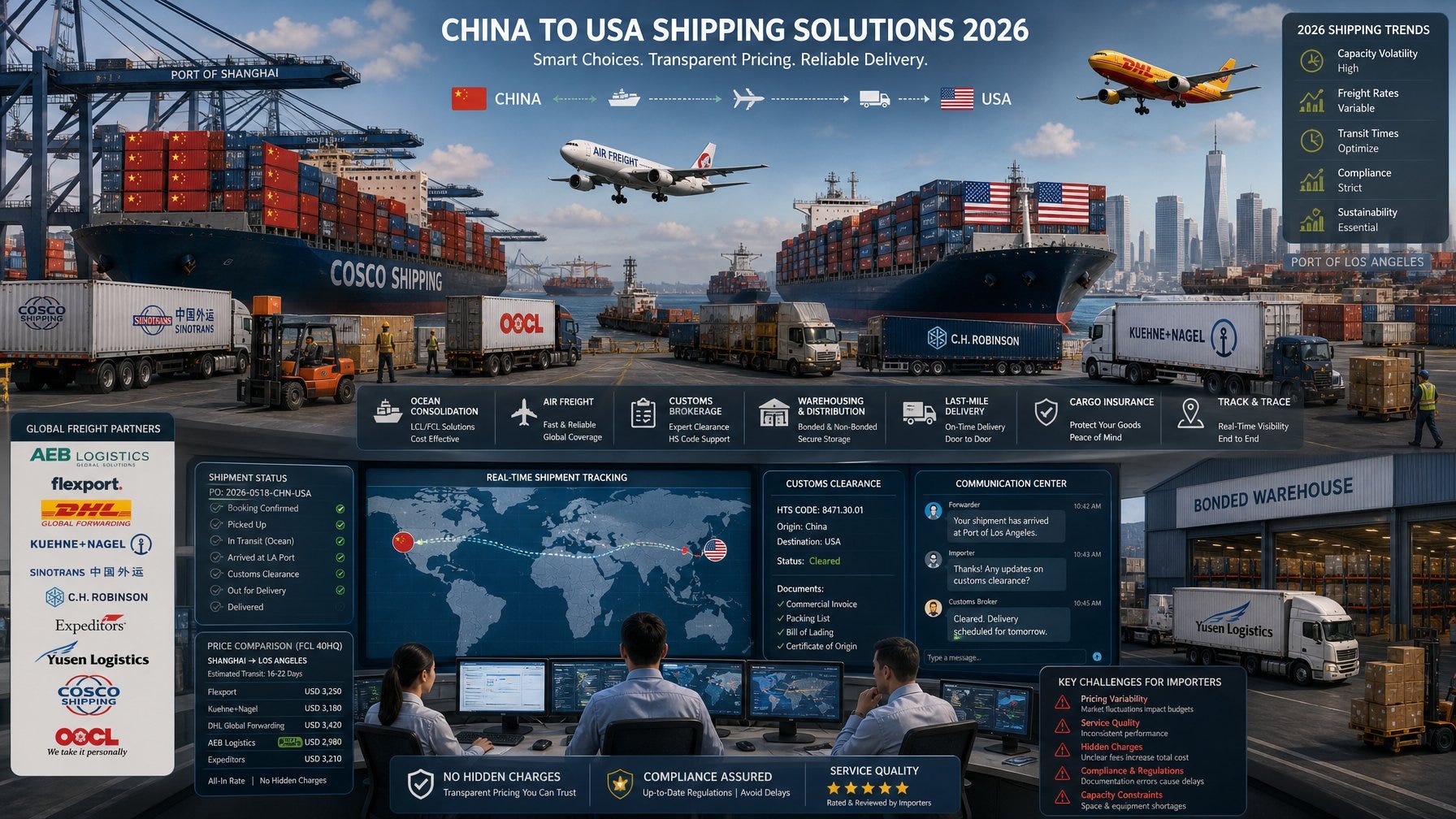
Shipping products from China to the USA? You’ll need a freight forwarder who can manage ocean or air transport, handle customs paperwork, and get your goods to your door or warehouse.
Small and mid-sized importers often get lost comparing companies because pricing varies wildly and it’s tough to judge service quality before that first shipment.
This guide compares leading China to USA freight forwarders with real details about their service offerings, communication, and pricing so you can make a smarter choice—hopefully with fewer nasty surprises.
You’ll find info on global carriers and specialized logistics providers working the China-USA trade lane. There’s a rundown of ocean consolidation, air freight, customs brokerage, and warehousing services.
Each company profile links to official websites and points out what makes each forwarder a good fit for different shipment types. Whether you’re importing small batches from Alibaba or moving full containers for your business, there’s something here for you.
Contents hide
2 Flexport — Comprehensive China–USA ocean & air forwarding
3 DHL Global Forwarding China–USA Air Freight Express
4 Kuehne + Nagel China to USA multimodal freight services
5 Sinotrans — China export specialists to USA ports
6 C.H. Robinson China–USA ocean consolidation & brokerage
7 Expeditors International China to USA Import Solutions
8 Yusen Logistics China–USA FCL, LCL & warehousing
9 COSCO Shipping Logistics China–USA Sea Freight Carrier-Forwarder
10 OOCL Logistics China to USA container shipping and DDP options
11 Understanding Total Shipping Costs
11.1 Hidden Charges to Watch For
11.2 Factors That Impact Pricing
12 Evaluating Freight Forwarder Performance
12.1 Communication Standards and Transparency
12.2 Online Tracking and Digital Tools
12.3 Service Responsiveness for SMB Importers
13 Optimizing Customs Clearance and Compliance
13.1 Common Issues for First-Time Importers
13.2 Reducing Delays and Preventing Penalties
RELATED China to USA Freight Forwarders: 2026 Comparison, Costs, and Best Services
AEB Logistics
AEB Logistics calls itself a China to USA shipping specialist with a big focus on transparent pricing. They offer air freight, ocean freight, express shipping, and DDP options.
If you’re selling on Amazon, AEB has dedicated FBA forwarding services. They’ll handle compliance and customs clearance as part of their end-to-end logistics management model.
AEB Logistics wants to make global trade simple by combining competitive pricing with customs know-how. You’ll get transparent quotes before you commit to anything.
They’re targeting modern importers who want hands-on support and real supply chain coordination. Their service model is designed for businesses that hate hidden fees and confusing pricing.
You can request quotes right through their platform. They offer different shipping methods so you can pick what fits your timeline and budget.
RELATED Freight Forwarding Services: Comparing China–USA Providers
Flexport — Comprehensive China–USA ocean & air forwarding
Flexport runs a digital freight platform that covers both ocean and air shipments from China to the USA. You get access to their tech platform, which tracks your cargo in real time from pickup to delivery.
The company offers shipping from China to USA through a network of partner carriers and warehouses. You can book ocean freight for full containers or use consolidation if you’re shipping smaller volumes.
If you need speed, their air freight options are available. Their platform shows pricing before you book, which is honestly a relief.
You also get customs brokerage services to manage import paperwork and clearance at US ports. Flexport assigns you a dedicated account team who answers questions through their messaging system.
The AI-powered platform gives you supply chain visibility, including tracking updates and estimated arrival times. Their services include trucking from Chinese factories to ports and final delivery to your US warehouse.
You pay separately for ocean or air freight, customs clearance, and inland transport—costs depend on shipment size and route.
RELATED Top Tips to Find the Best Freight Forwarder China to USA
DHL Global Forwarding China–USA Air Freight Express
DHL Global Forwarding is a separate division from DHL Express, focusing on customized freight solutions instead of standard courier services. You’ll have access to their air freight network linking major Chinese export hubs like Shanghai, Shenzhen, and Guangzhou to US gateway cities.
Their air freight express service usually delivers in 3-7 days depending on your airports. You can track shipments online and get updates at key milestones.
DHL Global Forwarding handles customs clearance paperwork and can even arrange duty payment for you. Rankings put DHL Supply Chain & Global Forwarding among the top three air freight forwarders worldwide for 2026.
You’ll need to request quotes directly since they don’t publish standard rates online. Pricing depends on shipment weight, size, route, and the current market. Minimums often start around 100 kg for their air freight.
Their customer service teams work in both Chinese and English time zones. You can reach account managers by email, phone, or their portal for help with shipments.
RELATED Freight Forwarder China To USA: Essential Guide For Efficient International Shipping
Kuehne + Nagel China to USA multimodal freight services
Kuehne + Nagel is one of the world’s biggest logistics providers with almost 1,300 locations in nearly 100 countries. You can tap into their ocean freight, air freight, and ground transportation for China to USA shipments.
They’ve got dedicated teams in major Chinese manufacturing hubs, so you get export documentation support and local pickup help.
Kuehne + Nagel handles customs brokerage as part of the package. You also get warehousing options at both ends if you need to store goods before delivery.
They offer contract logistics and project logistics along with standard forwarding. Their cargo insurance and packaging services give extra protection for fragile or valuable goods.
With 400,000 customers worldwide, they’ve built relationships with carriers that could help your shipping rates.
Their online tracking tools let you follow shipments across different transport modes. This helps you plan inventory arrivals and manage delivery expectations with your customers.
RELATED China to USA Freight Forwarding: Top 7 Forwarders for Small and Mid-Sized Businesses
Sinotrans — China export specialists to USA ports
Sinotrans tops the 2026 global freight forwarding rankings with 4.92 million TEUs handled in maritime shipping. The company started in 1993 and is based in Beijing.
You get access to air freight, sea freight, and warehousing built for Chinese exporters. Sinotrans focuses on businesses shipping out of China to international markets, especially major USA ports.
They hold the number one spot among China-USA freight forwarders by volume. Shipments move through established networks that connect manufacturing regions in China to American ports.
Sinotrans works well if you need reliable container shipping and warehousing before goods leave China. You can set up customs clearance and documentation through their cross-border trade systems. Their large scale often means competitive pricing on standard routes.
C.H. Robinson China–USA ocean consolidation & brokerage
C.H. Robinson is a non-asset freight broker—they don’t own ships or warehouses. Instead, they negotiate space with ocean carriers for you.
Their ocean freight services help you plan for changing market demand. You get access to experts working across time zones to solve problems as they pop up.
The company offers freight brokerage services for all transport modes through their digital platform. This lets you compare ocean and air routes from China to USA ports.
C.H. Robinson tracks the Trans-Pacific ocean market and provides regular updates about shipping conditions. They mention that imports to the US spike before Lunar New Year as factories gear up for the holiday.
You can expect consolidation services that combine smaller shipments to cut costs. Their broker model means pricing changes based on current carrier rates rather than fixed contracts.
RELATED Ultimate Guide: Finding the Best Freight Forwarder from China to the USA
Expeditors International China to USA Import Solutions
Expeditors International is a non-asset-based freight forwarder with offices across major Chinese manufacturing hubs. You get access to their global network for both air and ocean freight to US ports.
Their China to USA services cover customs brokerage, warehousing, and distribution management. You’ll work with local teams in China who coordinate with US staff to move your shipments through the supply chain.
Expeditors uses its own tech platform for shipment tracking and documentation. You can see real-time updates on your cargo status and access customs paperwork online.
The company manages compliance for US Customs and Border Protection. Shipments go through their established processes for classification, valuation, and entry filing, whether you need formal or informal entry.
Expeditors prices everything through custom quotes—no published rate cards here. You’ll have to request pricing for your shipping lanes and cargo. Their fees usually break out freight costs from add-ons like customs clearance or cargo insurance.
RELATED Freight forwarding from China to USA: How to Choose a China to USA Freight Forwarder?
Yusen Logistics China–USA FCL, LCL & warehousing
Yusen Logistics runs global freight forwarding operations with established China-to-USA shipping lanes. You can access ocean freight forwarding services that include both full container load and less-than-container-load options.
The company handles FCL shipments when you need exclusive container space for larger orders. Their LCL service combines smaller shipments with cargo from other importers, cutting costs if you don’t have enough goods to fill a full container.
Yusen offers warehousing in China and the United States. This lets you store inventory near ports before final delivery to your business.
Their services also include customs brokerage and cargo tracking. You’ll find their network covers major shipping needs.
The forwarder partners with major ocean carriers on Pacific routes. Your shipments move through ports like Shanghai, Shenzhen, and Los Angeles or Long Beach.
Transit times usually range from 14 to 30 days, depending on your origin and destination ports. You can request quotes directly through their website to compare rates against other forwarders.
RELATED China to USA Freight Forwarders: 2026 Comparison, Costs, and Best Services
COSCO Shipping Logistics China–USA Sea Freight Carrier-Forwarder
COSCO Shipping Logistics acts as both ocean carrier and freight forwarder. This gives them direct control over vessel space on China–USA routes.
You get access to their integrated container service network for door-to-door logistics. Their supply chain solutions cover the full journey from Chinese factories to your US warehouse.
COSCO SHIPPING North America earned recognition from the Agriculture Transportation Coalition in 2026 for supporting US agricultural exporters. That’s a good sign—they maintain strong relationships with US regulatory groups.
Their pricing works differently since they own the ships. You negotiate directly with the carrier, not a middleman.
This can reduce costs, but you might have less flexibility if you want to switch carriers mid-contract. COSCO usually requires larger shipment volumes for the best rates.
If you ship multiple containers per month, you may qualify for contract pricing. Smaller importers sometimes get better per-container rates with traditional forwarders who consolidate cargo.
Their booking systems connect to Chinese manufacturing hubs. You’ll work with local COSCO offices in China for pickup scheduling and export paperwork.
RELATED Freight Forwarding Services: Comparing China–USA Providers
OOCL Logistics China to USA container shipping and DDP options
OOCL Logistics is the freight forwarding arm of Orient Overseas Container Line, one of the world’s largest ocean carriers. You get direct access to vessel space and container availability when you work with them.
Their China to USA service includes both FCL and LCL ocean freight options. You can book full containers or consolidate smaller shipments, depending on your cargo volume.
OOCL Logistics offers DDP shipping arrangements—they handle customs clearance, duty payment, and final delivery to your door. This takes a lot of paperwork off your plate.
You get a single all-in price that covers ocean freight, trucking, tariffs, and port fees. Their online platform lets you request quotes and track shipments in real time.
You can see container locations and estimated arrivals through their dashboard. OOCL Logistics has offices in major Chinese manufacturing hubs like Shenzhen, Shanghai, and Ningbo.
They also have teams at US ports like Los Angeles, Long Beach, and New York to coordinate inland transportation. Their pricing reflects their carrier-owned status rather than an independent broker model.
RELATED Top Tips to Find the Best Freight Forwarder China to USA
Understanding Total Shipping Costs
Shipping costs from China to the USA include more than just the freight rate you see quoted. Your final bill usually includes base transport fees, fuel surcharges, customs duties, and handling charges that can add 30-50% to initial estimates.
Hidden Charges to Watch For
Documentation fees show up on almost every invoice. These cover bills of lading, commercial invoices, and packing lists your freight forwarder prepares.
Customs clearance fees typically range from $50 to $150 per shipment. Some forwarders include this in their quotes, while others tack it on later.
Terminal handling charges (THC) apply at both origin and destination ports. You’ll pay these even if your forwarder doesn’t mention them up front.
Detention and demurrage fees start when containers sit too long at ports or warehouses. These charges can hit $100-$200 per day after free time runs out.
Fuel surcharges change monthly with oil prices. They can add 10-25% to your base freight cost.
Chassis fees for container movement and CFS charges for cargo consolidation often surprise first-time importers. Freight forwarders from China to USA should disclose these up front.
Factors That Impact Pricing
Shipping mode makes the biggest difference. Air freight costs $4-$8 per kilogram, while ocean freight runs $800-$3,000 per container.
Cargo volume matters a lot. Full container loads (FCL) offer better per-unit rates than less-than-container loads (LCL) once you go past 15 cubic meters.
Seasonality drives rates up and down throughout the year. Peak season (August through October) can double shipping costs compared to February or March.
Port selection affects your total cost. Shipping to Los Angeles or Long Beach usually costs less than routing through smaller East Coast ports.
Current tariff rates and customs requirements add duties anywhere from 0% to 25%, depending on product category and country of origin rules.
RELATED Freight Forwarder China To USA: Essential Guide For Efficient International Shipping
Evaluating Freight Forwarder Performance
A freight forwarder’s day-to-day performance matters more than their marketing promises. Strong communication systems, real-time tracking access, and quick responses set reliable partners apart from those that leave you wondering where your shipment is.
Communication Standards and Transparency
Your freight forwarder should give you clear contact methods and consistent updates throughout the shipping process. Look for companies that assign a dedicated account manager who gets back to you within 24 hours on business days.
Key communication features to check for:
Direct email and phone access to your account rep
Regular shipment updates at major milestones (pickup, port arrival, customs clearance, delivery)
Clear explanations of fees before you commit to a shipment
Written quotes that break down all charges separately
Top forwarders often use messaging apps like WhatsApp or Slack for quicker replies. They’ll send proactive alerts when delays pop up instead of waiting for you to ask.
Choosing the right freight forwarder means looking at how transparent they are about total landed costs and possible delays.
Online Tracking and Digital Tools
Modern freight forwarders give you online portals to check shipment status without emailing back and forth. These systems should show your cargo location, expected arrival dates, and document status in real time.
Useful digital features include:
Live tracking dashboards updating at each checkpoint
Document uploads for commercial invoices, packing lists, and customs forms
Automated notifications via email or SMS when status changes
Historical shipment data so you can review past performance and costs
Companies like Flexport and Freightos built their reputation on digital-first platforms. Even traditional forwarders now offer basic tracking portals.
Test the system during your quote process to see if it fits your tech comfort zone. No need to settle for clunky tracking in 2026, right?
Service Responsiveness for SMB Importers
Small and medium importers need forwarders who actually care about smaller shipments. Companies focused on big enterprise clients might deprioritize your LCL shipments or drag their feet if you only ship a few times a year.
Ask possible forwarders about their minimum shipment requirements and how quickly they respond on average. Reliable freight forwarders from China to the USA should answer questions about customs paperwork, delivery schedules, and problems within one business day.
Watch out for ignored emails, vague fee explanations, or pressure to commit before seeing the full cost breakdown. Good forwarders welcome detailed questions and provide references from similar-sized importers.
They know that first-time Amazon sellers or Shopify owners need more guidance than experienced logistics managers.
RELATED China to USA Freight Forwarding: Top 7 Forwarders for Small and Mid-Sized Businesses
Optimizing Customs Clearance and Compliance
Incorrect paperwork or missing product details cause most shipment holds at US ports. Paying attention to Harmonized Tariff Schedule codes and having the right documents ready before your container arrives can save you weeks of delay.
Common Issues for First-Time Importers
Missing or wrong commercial invoices stop shipments at the border more than any other mistake. You need the seller name and address, buyer name and address, item descriptions, quantities, unit values, and country of origin on every invoice.
Your HS codes determine the duty rate and whether extra agencies need to inspect your goods. Getting the code wrong can trigger penalties or force you to pay higher tariffs.
US customs clearance for China to USA shipments has become more strict in 2026. Many first-time importers forget that some products require licenses or permits from agencies like the FDA, EPA, or USDA.
Electronics, food, cosmetics, and wood products often need extra approvals before customs will release them. Your freight forwarder should flag these requirements during booking, but you’re still responsible for compliance.
Reducing Delays and Preventing Penalties
Submit your entry documents to customs at least 48 hours before your cargo arrives at the U.S. port. This gives CBP officers enough time to review paperwork and ask for corrections before your container shows up.
Bond amounts should cover the total shipment value plus duties. Use single-entry bonds for one-off shipments, but if you import more than three times a year, continuous bonds make more sense.
Keep detailed records of all communication with your supplier about product specs and materials. If customs questions your declared value or product description, you’ll need proof to back up your filing.
Store invoices, packing lists, and certificates of origin for at least five years. It’s a hassle, but it can save you huge headaches down the line.
Work with a customs broker who actually asks about your products before filing entries. Good brokers double-check HS codes, look for trade restrictions, and make sure values match your commercial documents.
Frequently Asked Questions
First-time importers usually ask about choosing a forwarder, figuring out costs, and handling customs paperwork. Getting clear answers helps you avoid rookie mistakes and plan your budget.
Which companies are considered the most reliable options for shipping freight from China to the United States in 2026?
AEB Logistics, Flexport, DHL Global Forwarding, Kuehne + Nagel, and Sinotrans are among the most reliable freight forwarders from China to USA in 2026. Each one brings something different to the table.
Flexport offers both ocean and air forwarding with strong digital tracking. DHL Global Forwarding is known for fast air freight express services.
Kuehne + Nagel covers multimodal freight, mixing different shipping methods. Sinotrans has deep experience as a China export specialist for major U.S. ports.
Your best choice really depends on shipment size, speed, and budget. Smaller importers, especially those buying from Alibaba, often like forwarders with lower minimums and simpler pricing.
What services should a full-service forwarder include for first-time U.S. importers (pickup, consolidation, customs, delivery)?
A full-service forwarder should handle factory pickup in China, warehouse consolidation, ocean or air transport, U.S. customs clearance, and final delivery to your door. This end-to-end approach is often called DDP (Delivered Duty Paid) shipping.
Pickup means the forwarder collects your cargo directly from your supplier or factory. Consolidation lets you combine several small orders into one shipment, which saves money.
Customs clearance services include filing paperwork, paying duties and taxes, and coordinating with U.S. Customs and Border Protection. Final delivery brings your goods to your warehouse or fulfillment center.
First-time importers get the most value from forwarders who assign a dedicated account manager. Having someone to explain each step and answer questions really helps.
How can an importer compare quotes to avoid hidden charges like destination fees, demurrage, and documentation costs?
Ask for an all-in quote that breaks down every fee instead of a single lump sum. Be sure to ask about destination charges, terminal handling, demurrage, detention, and documentation costs.
Destination fees cover port charges at the U.S. arrival port. Demurrage charges hit if you leave a container at the port too long after it arrives.
Detention fees come up when you keep the shipping container beyond the free time for unloading. Documentation costs include bills of lading, certificates of origin, and customs filing fees.
Comparing China-USA freight forwarders means looking at total landed cost, not just the basic freight rate. Some forwarders show low base rates but sneak in extra surcharges later.
Get written quotes with all fees listed separately. Confirm if duties and taxes are included or if you’ll pay those on your own.
When should a small importer choose air freight, ocean freight, or express courier based on cost, speed, and risk?
Pick ocean freight for shipments over 500 pounds if you can wait 25 to 40 days. Ocean shipping costs way less per pound but takes longer.
Air freight works for shipments between 200 and 2,000 pounds when you need delivery in 7 to 15 days. It costs more than ocean but less than express courier for medium loads.
Express courier services like DHL or FedEx are best for small urgent shipments under 200 pounds you need in 3 to 7 days. The price per pound is highest, but you get door-to-door tracking and quick customs clearance.
Current shipping rates from China to USA change with the season and fuel prices. Ocean rates usually run $1 to $4 per kilogram, while air freight is $4 to $8 per kilogram.
Think about product value and shelf life too. High-value electronics or time-sensitive stuff make air freight easier to justify than heavy, low-margin goods.
What documents and compliance steps are typically required for U.S. customs clearance when buying from Alibaba suppliers?
You’ll need a commercial invoice, packing list, and bill of lading for every shipment. The commercial invoice shows your goods’ value and determines what duties you owe.
Your packing list details what’s inside each box by quantity, weight, and size. The bill of lading acts as your receipt and contract with the carrier.
Shipping from China to USA also requires an importer of record number, usually your business EIN or SSN. Some products need extra certificates or permits from government agencies.
Food items require FDA prior notice. Electrical products may need FCC compliance, and textiles often need country of origin labeling.
Your freight forwarder should file your Importer Security Filing (ISF) at least 24 hours before your ocean container loads in China. Miss this deadline, and you could face penalties of $5,000 or more.
What communication and tracking standards should an importer expect from a forwarder throughout the shipment lifecycle?
After you place your order, you should get booking confirmation within 24 hours. This confirmation usually includes estimated departure and arrival dates.
Your forwarder needs to let you know when they pick up cargo from the factory. You shouldn’t have to chase them for this info—it’s basic courtesy, honestly.
Expect updates when your shipment leaves China and when it arrives at the U.S. port. You’ll also want a heads-up once it clears customs and goes out for final delivery.
Leading shipping companies usually have online portals, so you can check your shipment status whenever you feel like it—day or night.
If customs holds your shipment or there’s any kind of delay, your forwarder should alert you right away. They should also reply to your emails within one business day and give you a direct phone number for urgent stuff.
Tracking works best if you have the container number for ocean freight or the airway bill number for air shipments. Express couriers, in my experience, give you the most detailed tracking with frequent updates throughout the day.
Don’t be shy—ask about their standard communication frequency when you request your first quote. The best forwarders send you updates before you even think to ask for them.